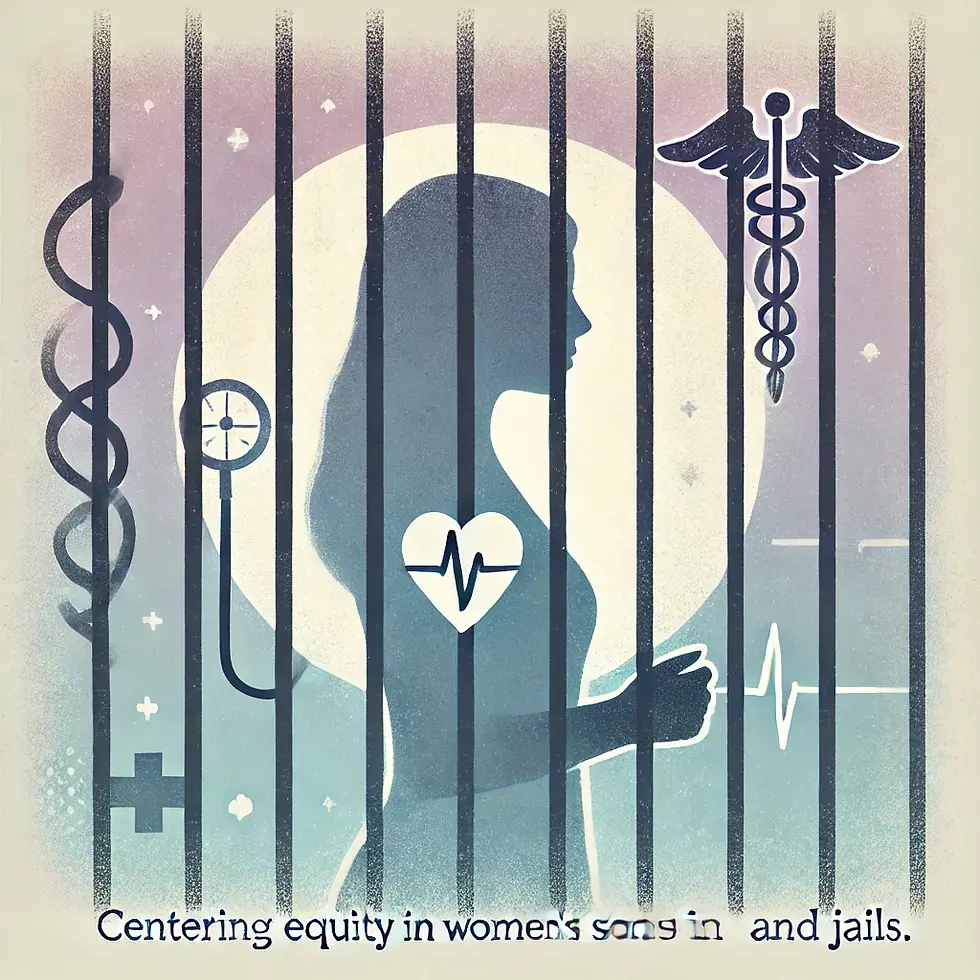
The Pregnancy Police - When a medical crisis becomes potential evidence


At what point did a pregnancy become potential evidence?
A woman miscarries at home and goes to the emergency room. A pregnant patient tells her doctor she has been using drugs and wants help. Someone manages an abortion outside the formal medical system and later seeks care because she is bleeding. A woman delivers a stillborn baby and suddenly finds herself answering questions not only from doctors, but from police.
None of those situations necessarily begins as a crime. But increasingly, that does not mean they remain outside the criminal legal system.
Pregnancy Justice documented at least 412 criminal cases related to pregnancy, pregnancy loss, or birth during the first two years after Dobbs, from June 2022 through June 2024. Its earlier research identified nearly 1,400 cases of pregnancy-related criminalization between 2006 and the reversal of Roe. Importantly, the cases are not limited to abortion. Pregnancy loss, birth, and allegations of substance use during pregnancy make up a substantial part of the landscape Pregnancy Justice has documented.
That should force us to think about reproductive health in a different way. The question is no longer only whether someone can obtain an abortion. It is also whether pregnancy itself can change how the law sees her.

When the Patient Becomes the Suspect
Medicine depends on information. Doctors need patients to tell them what happened, what they took, what symptoms they experienced, and what they are afraid to say out loud. That is especially important during a miscarriage, overdose, pregnancy complication, or psychiatric crisis.
Criminalization changes that relationship.
If someone believes that admitting drug use could trigger a child-welfare investigation, that a pregnancy loss might be questioned, or that information disclosed during emergency treatment could eventually become part of a criminal investigation, telling the complete truth no longer feels like a purely medical decision. It becomes a legal calculation.
That concern is not hypothetical. If/When/How identified 61 cases between 2000 and 2020 in which people were criminally investigated or arrested for allegedly self-managing an abortion or helping someone else do so across 26 states. Its research found that police were often brought into cases by people the patient encountered or trusted, including health-care providers, social workers and acquaintances.
The organization also makes an important distinction that is often lost in public debate: people have faced criminal investigation even where the conduct prosecutors were examining was not itself expressly prohibited by an abortion statute. Existing criminal laws can be interpreted or repurposed in pregnancy-related cases.
That is how a health-care encounter can begin to look like evidence collection.

Fetal Personhood Changes More Than Abortion
One of the legal ideas shaping this landscape is sometimes described as fetal or prenatal personhood: extending legal recognition or protections to embryos or fetuses in ways that may affect the pregnant person's legal rights and obligations.
The implications can extend far beyond an abortion clinic.
Pregnancy Justice reports that prosecutors have used child-neglect, child-endangerment and other criminal laws in cases involving substance use, pregnancy loss and birth. In its analysis of cases between 2006 and 2022, more than three-quarters of the cases occurred in a relatively small group of states that had expanded legal definitions to include fetuses, embryos, or fertilized eggs.
The legal landscape continues to evolve. Pregnancy Justice reviewed more than 730 bills during the 2025–2026 legislative sessions and identified proposals both expanding prenatal-personhood concepts and, in other states, attempting to strengthen protections for pregnant people, including people with substance-use disorders or adverse pregnancy outcomes.
That matters because once the fetus is treated as a potential victim independent of the pregnant patient, ordinary medical behavior can be examined through a criminal lens.
What did she take? Did she follow medical advice? Did she use drugs? When did she know she was pregnant? Where did the miscarriage occur? What did she do with the remains? Why did she wait before seeking medical attention?
Pregnancy Justice reported in 2026 that people have been investigated or prosecuted following pregnancy loss for conduct as varied as miscarrying in a toilet, burying fetal remains, disposing of remains or bringing them to a hospital.
At some point, we have to ask what happens to health care when grief itself can become something a person may later have to explain to police.

The Hospital Is Not Always a Wall Between You and the State
Many people assume medical privacy means that whatever happens inside a hospital stays there.
The reality is more complicated.
HIPAA generally protects medical information, but it also allows disclosure of protected health information through legal processes such as court orders, warrants, subpoenas, and certain other law-enforcement requests. HHS also states that providers generally are not automatically required to report someone to police simply because they suspect a self-managed pregnancy loss.
Federal reproductive-health privacy protections have themselves been contested. A 2024 federal rule created additional protections for certain reproductive health information, but a federal court in Texas vacated most of the rule in June 2025. HHS continues to provide guidance on the underlying HIPAA protections and limits governing disclosures.
The legal details matter. But so does the patient's perception. If people believe going to the hospital might expose them to police, child-welfare authorities or prosecution, some will delay care. And delayed care is not an abstraction when someone is hemorrhaging, experiencing an infection, withdrawing from drugs or suffering a pregnancy complication.
Privacy is therefore not merely a civil-liberties issue. It can become a patient-safety issue.

Punishing Substance Use Does Not Treat It
The clearest example may be substance use during pregnancy.
Substance-use disorder is a health condition. Yet pregnancy can change the legal consequences attached to it. Some states treat prenatal substance exposure as grounds for child-welfare intervention or impose reporting requirements, creating circumstances in which disclosure to a medical professional may lead to consequences outside the examination room.
The American College of Obstetricians and Gynecologists opposes punitive approaches to substance use during pregnancy and argues that education, prevention and community-based treatment are more appropriate than criminal prosecution or punitive testing and reporting. ACOG also warns that fear of consequences can interfere with prenatal care and honest communication between patients and clinicians.
That should not be difficult to understand.
If asking for help may cost someone her freedom or her children, the system has created a powerful incentive not to ask. The result can be exactly the opposite of what the policy supposedly seeks: less disclosure, less treatment and greater danger.

This Pattern Is Familiar
This is where the issue intersects with SWOP Behind Bars' work.
Sex work and pregnancy are not the same. Trafficking, abortion, drug use and miscarriage are not interchangeable experiences, and we should not pretend they are. But the architecture of criminalization can look remarkably familiar. A social or medical problem is identified. Meaningful services are inadequate. Criminal law becomes the substitute.
People with the fewest resources experience enforcement most intensely.
We have watched that happen around sex work. Instead of housing, we get policing. Instead of economic support, we get arrests. Instead of accessible health care, we get surveillance. Instead of listening to the people living inside complicated circumstances, institutions decide that punishment is the intervention.
Pregnancy criminalization raises the same fundamental problem. Once police, prosecutors and courts become the default response to health and social problems, every interaction begins to change.
People hide information. They avoid institutions. Professionals become potential reporters. Medical records become potential evidence.
And people who already live closest to poverty, racism, unstable housing, incarceration, substance use, and heavily policed communities have the least room to absorb the consequences when something goes wrong.

Care Before Criminalization
This does not mean every pregnancy-related death, stillbirth or injury should be beyond investigation. There will always be circumstances in which authorities investigate suspected crimes.
But investigation should not become the default explanation for pregnancy loss.
Addiction should not become more punishable because the person experiencing it is pregnant. A miscarriage should not automatically invite suspicion. And someone entering an emergency room should not have to calculate whether telling a doctor the truth could eventually help build a case against her.
The health-care system cannot function well when patients see doctors as possible gateways to police.
The criminal legal system cannot repair gaps in addiction treatment, prenatal care, mental-health services, housing or economic support. It can punish people after those systems fail them.
That is not the same thing.

The question we should keep asking is simple: When someone experiences a pregnancy crisis, what do we want her first thought to be?
I need medical help.
Or:
Could I get arrested for telling someone what happened?
Women have spent years watching what happens when punishment is offered as a substitute for care.
Pregnancy criminalization gives us another reason to insist on the opposite approach:
Care before crisis. Services before surveillance. Support before punishment.
Because a hospital should be somewhere you go to save your life—not somewhere you are afraid you may have to defend it.