
The Truth Behind Anti-Trafficking Initiatives: A Closer Look at the System

Updated: Oct 9, 2025

Mandy was standing outside a 7-Eleven at dusk, texting a friend for a ride. Heels on, yes—but not the kind you wear to a strip club, just the only clean shoes left after a week of couch-surfing. A cop rolled by slow, then circled back. She didn’t know that waving at a car—her friend’s car—would count as "intent to solicit."
Within an hour, she was in handcuffs. By morning, she was a case number in a so-called anti-trafficking initiative being paraded at a press conference as a "successful rescue." No trafficker was arrested. No support was offered. Just a court date, a mugshot, and a judge who handed her a pamphlet and a list of rules for a diversion program she couldn’t possibly complete.
That’s not rescue. That’s entrapment. And she’s not alone.
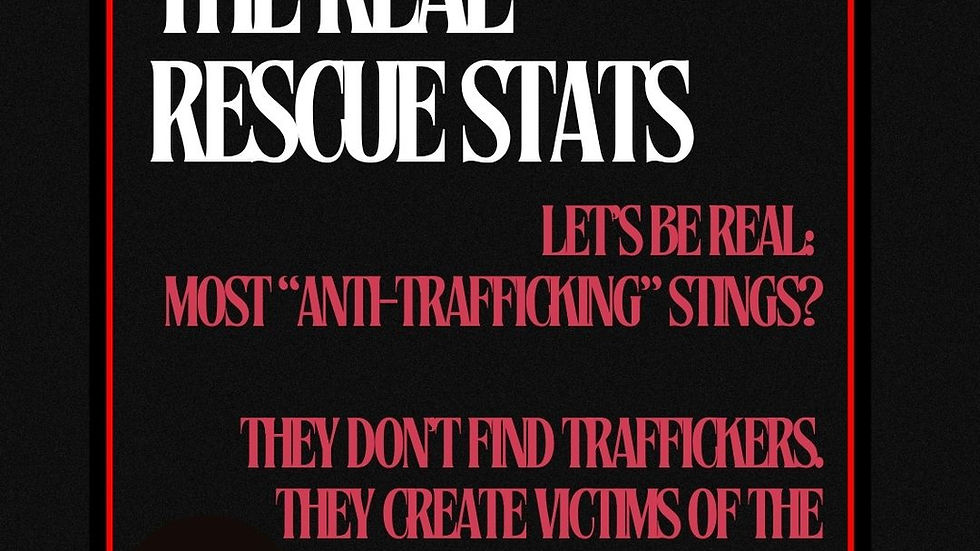
Let’s start with a cold, hard truth: the so-called “anti-trafficking” initiatives that claim to “rescue” sex workers often function more like a conveyor belt straight to jail. And spoiler alert—if your “rescue” ends with a mugshot, trauma, and court-mandated shame therapy, it wasn’t a rescue. It was a raid with a PR team.
Despite all the glossy PSAs, billboards, and tearful press conferences, most “anti-trafficking” operations disproportionately arrest adult consensual sex workers—not traffickers, not clients, and certainly not the multimillion-dollar industries that profit off criminalization. These operations rarely even identify trafficking victims. What they do reliably produce are court dockets full of Black, brown, poor, queer, trans, and undocumented folks booked on charges like prostitution, loitering, failure to identify, or possession of condoms—yes, condoms.
Let’s break down just a few of the conveyor belt’s moving parts:
1. Loitering Laws & “Intent to Prostitute” Charges
These laws aren’t about preventing harm—they’re about policing appearance, identity, and survival. In states like Florida, Louisiana, and formerly New York, vague loitering statutes have given police sweeping authority to arrest people—mostly Black, brown, trans, and low-income women—based on how they look, not what they’ve done.
In Florida, someone can be arrested under prostitution-related charges simply for being in a “known area” of sex work, wearing “provocative” clothing, or being seen talking to multiple people. There’s no requirement for an exchange of money or even an offer—just the officer’s “training and experience” to interpret intent.
Louisiana’s now-repealed “Crime Against Nature by Solicitation” law went even further, branding people—many of them queer and trans—with sex offender status for years, simply for alleged solicitation. And in New York, it took years of advocacy to finally repeal the “Walking While Trans” ban in 2021, a law that empowered cops to target trans women and femmes for simply existing in public space.
These laws aren’t about ending exploitation. They’re about controlling who is allowed to be visible, and where. They turn poverty into suspicion. They take survival and code it as criminal. And they make it terrifyingly easy to disappear someone into the legal system without ever having to prove wrongdoing—just “intent.”
2. Vice Squads & “End Demand” Stings
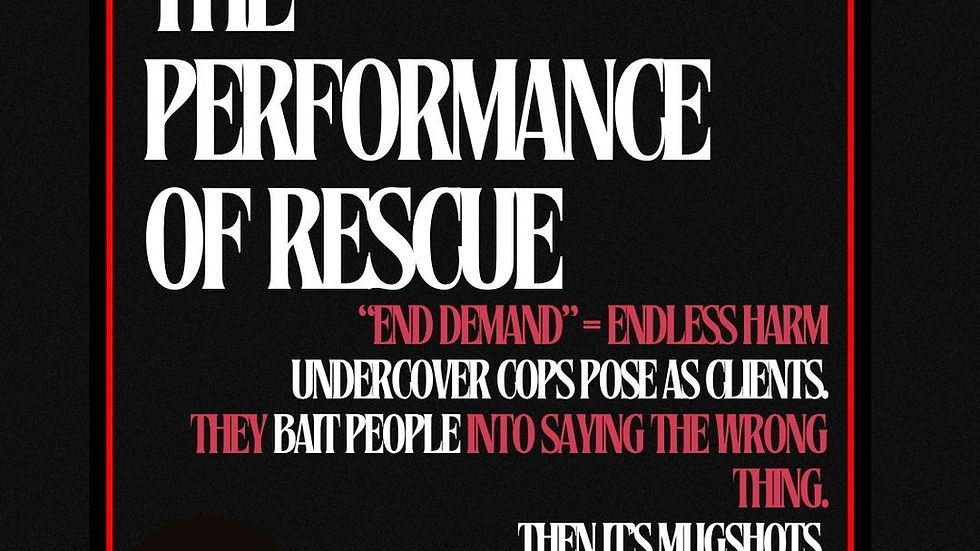
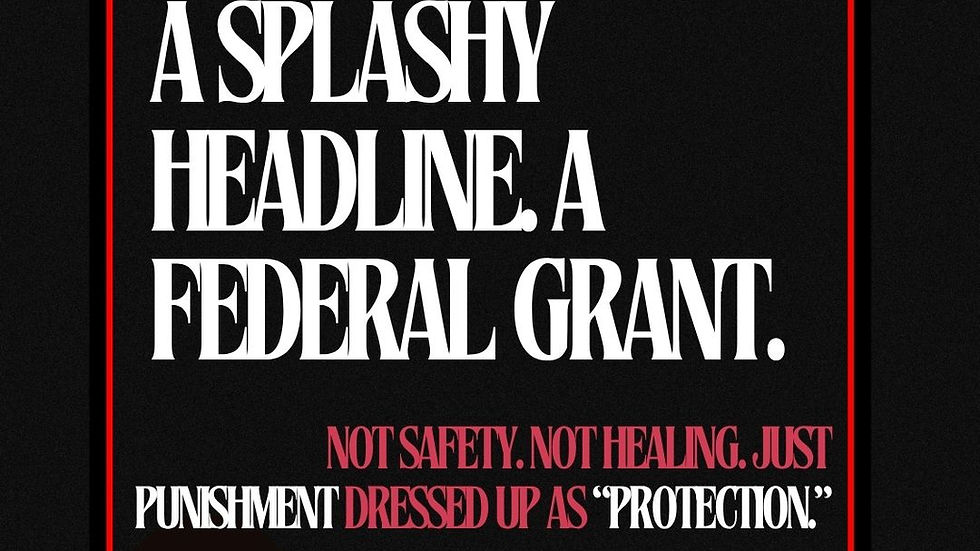
Let’s be clear: these operations are not designed to help trafficking survivors. They’re not even aimed at traffickers. What they are—plain and simple—are bait-and-switch traps. Undercover cops pose as clients, initiate conversations, coax workers into crossing a legal line, and then spring the arrest. It’s a performance of rescue, staged for the press and funded by federal grants, with lives collateral-damaged in the process.
The most heartbreaking part? Many of the people arrested in these stings believed they were talking to real clients—someone who could help them make rent, afford diapers, or pay for a motel room that night. Instead, they’re ambushed, cuffed, booked, and processed through a system that labels them criminals… then claims it was all done for their own good.
And the language they use? It’s marketing spin. “End demand.” It sounds thoughtful, even progressive—especially to those unfamiliar with the reality on the ground. But what it actually means is ramped-up policing, hyper-surveillance, and increased criminalization—not just of clients, but of everyone adjacent to the street economy. It forces the work further underground, away from safety, peer support, and harm reduction resources.
The logic behind these stings is baffling. Do police really believe that arresting sex workers will end trafficking? That fear will somehow eliminate the need to survive? That jail is a service? It’s hard not to feel that the real goal isn’t safety—it’s control. Control over bodies, over movement, over who gets to be visible, and who gets locked away under the guise of “rescue.”
We are left asking: how many more people have to be traumatized, criminalized, or deported before we admit this isn’t working? Because if the only thing your operation “rescues” someone from is the ability to pay their bills, it’s not rescue—it’s repression.
3. Diversion Programs (aka Probation in a Pretty Dress)
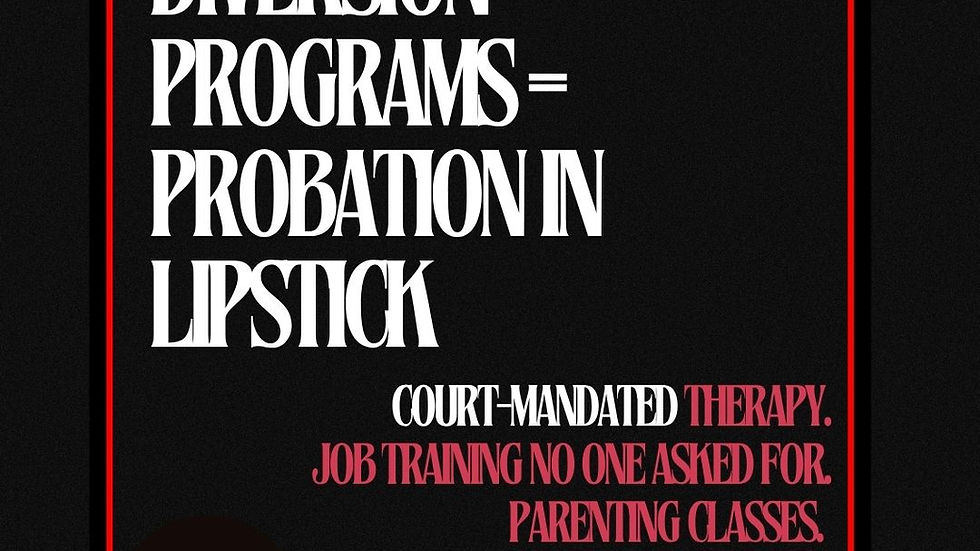
On paper, these programs sound like an alternative to jail. In reality, they’re a revolving door. Diversion often means court-mandated therapy, fines, mandatory job placement, drug tests, parenting classes, and frequent court check-ins. Miss one appointment—because you had no bus fare, couldn’t miss a shift, or didn’t have child care—and you’re right back in the system with even more charges stacked on your name.
These programs are built for imaginary people: ones with no kids, no trauma, no disabilities, and no barriers. In reality, they set people up to fail—then blame them for falling.
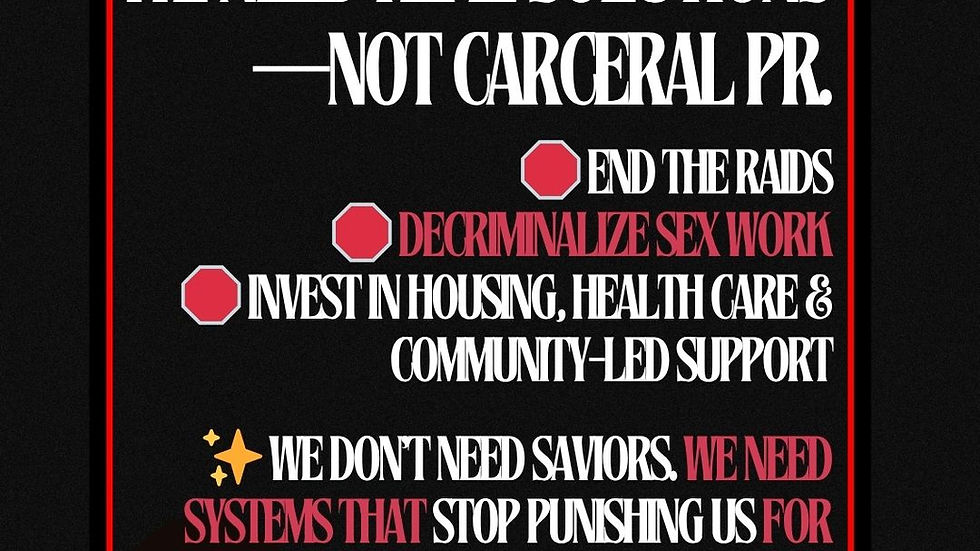
Let’s be honest: this isn’t a pipeline—it’s a Slip-n-Slide greased with racism, misogyny, transphobia, and state control. And the exit ramp isn’t reform; it’s jail, probation, or deportation. If we truly want to end trafficking, we need to stop caging people for the crime of trying to survive. That means decriminalizing sex work, dismantling carceral feminism, and investing in real, community-led support—not surveillance wrapped in a savior complex.
SurvivingTheSystem DecriminalizeNow NotYourRescueProject EndCarceralFeminism
Conclusion: A Call to Action
The current system fails to protect those it claims to help. Instead of rescue, we see entrapment. It’s time to rethink our approach. We need to advocate for policies that prioritize safety, dignity, and support for all individuals. Let’s work together to create a world where everyone can thrive without fear of criminalization.
In this fight, we must remember that true support comes from understanding and compassion, not punishment.


