What If We Treated Lawn Care the Way the Nordic Model Treats Sex Work?


A Job We All Rely On - And Pretend Is Simple
From the sidewalk, lawn care looks harmless. A quick mow. A trimmed hedge. A leaf blower is humming in the background.
Easy enough.
But step into the job itself, and it looks very different.
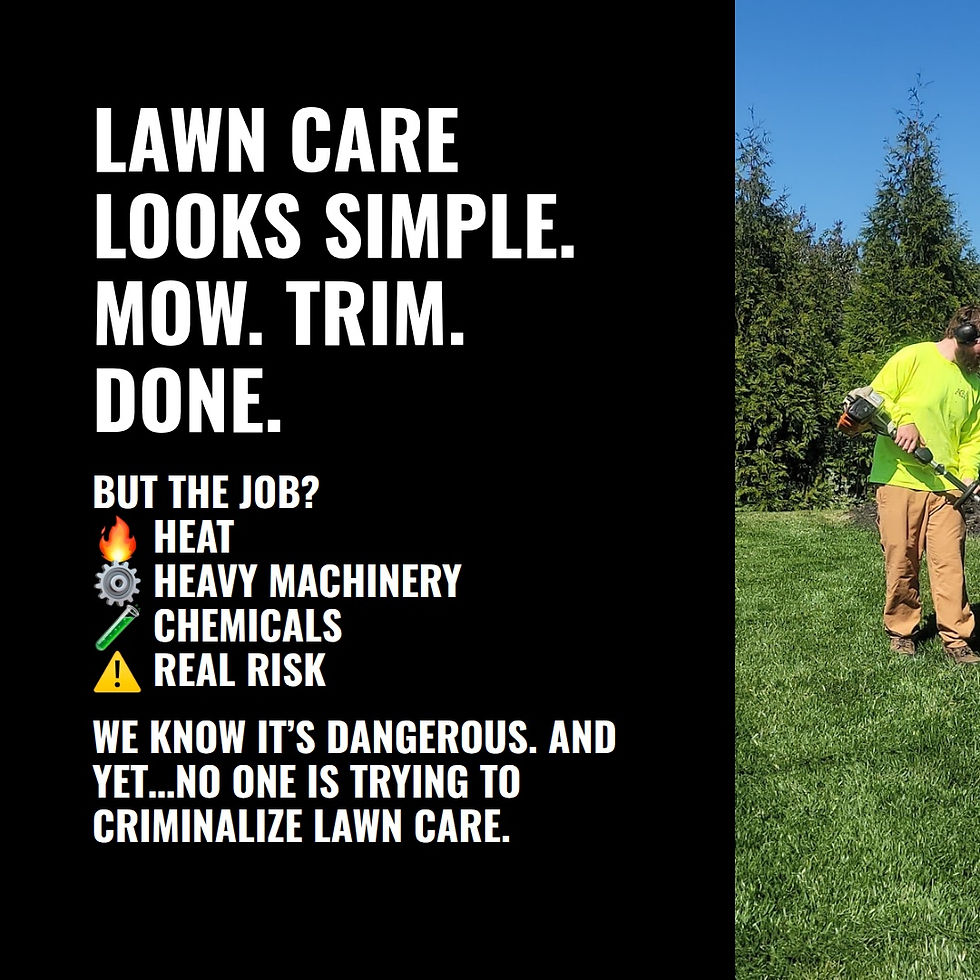
Landscapers work long hours in punishing heat, handling high-speed blades, chainsaws, pesticides, fuel, and heavy equipment. Injuries can mean cuts, crushed limbs, chemical exposure, heat exhaustion, and long-term wear on the body.
It is physical, skilled, and sometimes dangerous work.
And yet no one seriously suggests criminalizing it.

When Risk Becomes a Moral Panic
Now imagine the public narrative begins to shift.
Advocates start raising alarms about exploitation in landscaping.
Reports emphasize that many workers enter the field because of economic pressure, limited options, or immigration-related barriers to employment.
Commentators begin asking whether anyone would really choose this work if better opportunities existed.
Slowly, lawn care stops being framed as labor and starts being framed as harm.
Not harm that should be reduced through labor protections, safer conditions, or stronger enforcement against abuse. Harm that should be addressed by targeting the transaction itself.
The “Compassionate” Crackdown
An outright ban on lawn care would sound ridiculous. People want their lawns maintained. Cities enforce property codes. Apartment complexes, businesses, and homeowners all depend on the work. So policymakers offer what they call a more balanced alternative: the Nordic Lawn Care Model.
It is presented as humane. Workers themselves are not criminalized. Everyone else is.
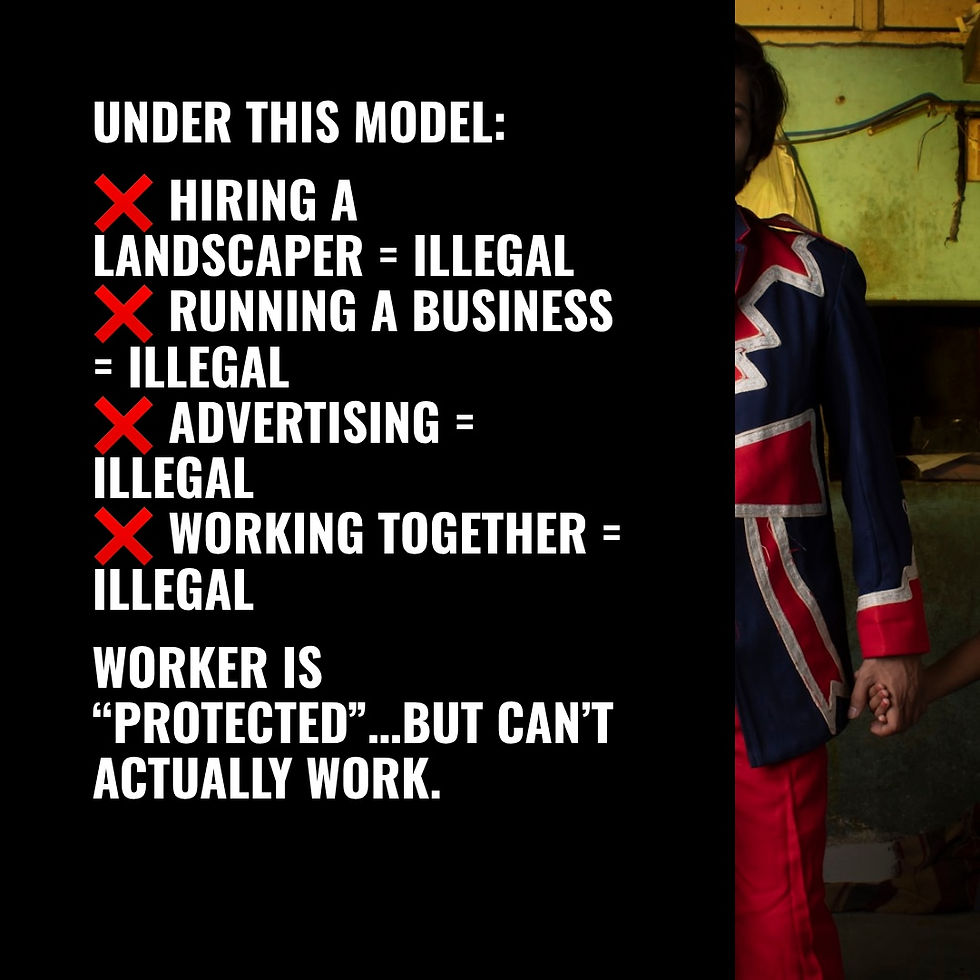
Hiring someone to mow your lawn becomes illegal.
Running a landscaping business becomes illegal.
Advertising services becomes illegal.
Renting space for lawn care operations becomes illegal.
Helping coordinate jobs becomes illegal.
Selling the service is legal in theory, but all the conditions that make it possible are banned in practice.
The worker is supposedly protected, but no longer allowed to have customers, coworkers, worksites, or infrastructure.
Other than that, completely legal.
The Gardening Problem
And if the issue is dangerous work, why stop at lawn care?
Gardening comes with many of the same risks: repetitive strain, heat exposure, heavy lifting, chemicals, and sharp tools. So imagine the same logic expanding outward. Suppose lawmakers decide they need to “protect” people from gardening, too, but only certain people. Maybe women are framed as especially vulnerable. Maybe migrant workers are described as too economically coerced to truly consent. Maybe informal neighborhood gardening networks are recast as suspicious.
Suddenly, community garden organizers face liability. Selling tools to the wrong person raises red flags. Hiring a woman to maintain your yard could be framed as exploitation. What began as a safety argument is starting to look a lot more like social control.
Because the real issue was never just risk. It was who society believes should be allowed to take it.
We Already Accept Risky Labor
We answer the question of consent to risky work every day.
Construction workers do dangerous jobs. Firefighters do dangerous jobs. Agricultural laborers, commercial fishers, roofers, loggers, and military personnel all engage in forms of labor with serious risks. We do not respond by criminalizing the people who hire them or the systems around them. We respond - at least in theory - by building labor standards, safety rules, training, oversight, and accountability.
Risk does not erase consent. It creates an obligation to reduce harm.
Demand Does Not "Disappear"
Here is the inconvenient truth:
grass keeps growing.
Homeowners still need their lawns cut.
Apartment complexes still need landscaping.
Cities still issue citations for neglected properties.
Demand does not vanish because lawmakers disapprove of the labor used to meet it.
So the work continues. It just continues under worse conditions.
Without formal businesses, workers have fewer ways to screen customers, document agreements, build reputations, or rely on shared infrastructure. The lawns still get cut, but the labor becomes quieter, more hidden, and less protected.

When Safety Starts Looking Like Evidence
Lawn care requires tools. Mowers, trimmers, gloves, goggles, gas cans, trailers, work vehicles. In a criminalized ecosystem, those tools stop looking like basic equipment and become evidence.
A shared truck can be framed as coordination.
Protective gear can be tied to illegal work.
Renting equipment can be recast as facilitation.
Working in pairs or crews becomes legally risky.
The very things that make the job safer and more efficient become liabilities.
So workers adapt.
They work alone.
They use older equipment.
They take more risks.
They avoid visibility.
The work does not disappear. The safety does.
The Added Risk for Migrant Workers
This is where the model becomes even more dangerous.
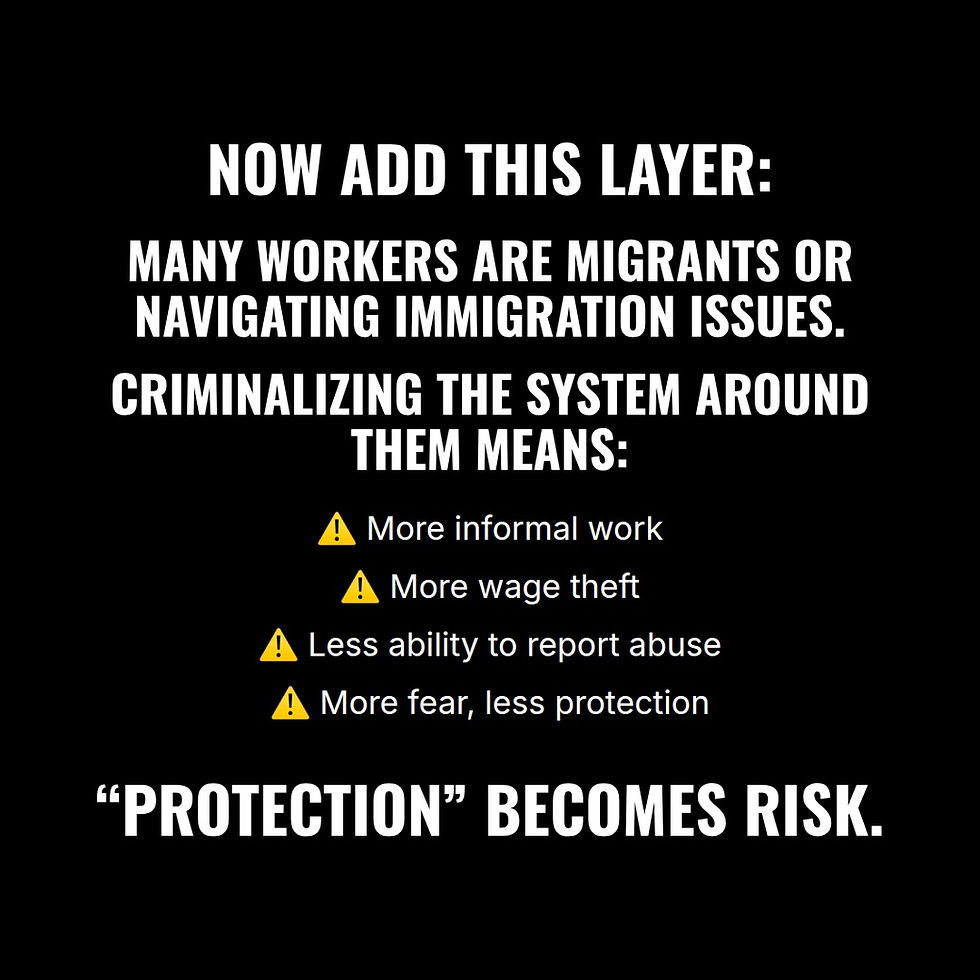
For many lawn care workers, especially migrants, undocumented workers, and people navigating precarious immigration status, criminalizing the buyer or the surrounding work structure does not just create inconvenience. It multiplies vulnerability.
When hiring becomes criminalized, work is pushed further underground. There is less paperwork, less transparency, fewer stable job relationships, and more fear on all sides. Workers who already face language barriers, limited legal protections, or exclusion from formal labor markets are forced into even more informal arrangements.
That means more wage theft, less ability to report abuse, and greater dependence on people who operate outside accountability. It means every interaction carries added risk.
The policy is sold as protection, but in practice, it makes already vulnerable workers more disposable.

Enforcement Theater
To prove the policy is working, enforcement ramps up.
Sting operations target homeowners hiring landscapers.
Press conferences celebrate citations and arrests.
Officials point to the decline of visible landscaping businesses as evidence of success.
Meanwhile, behind the scenes, the lawns are still being mowed.
The work did not end. It just became harder to see and easier to exploit.
That is what makes this kind of policy so politically useful. It creates the appearance of action without solving the underlying conditions that shape the work in the first place.

The Point of the Thought Experiment
This is the structure of the Nordic Model.
Workers are described as legal, but the ecosystem around them - clients, workplaces, advertising, third parties, safety infrastructure, and support systems - is criminalized. The result is predictable. The work does not disappear. It becomes more isolated, more precarious, and more dangerous.
That is not protection. That is displacement dressed up as compassion.
Grass Still Grows
You can criminalize the customer. You can shut down businesses. You can make tools harder to access. But you cannot stop the grass from growing, and you cannot stop people from finding ways to meet demand.
The question is not whether the work will exist.
The question is whether it will happen with rights, protections, and accountability - or without them.

At SWOP Behind Bars, we believe people deserve safety, dignity, and rights on the job regardless of the work they do. We created this series as a thought experiment to test the logic often used to justify the criminalization of sex work. By applying that same reasoning to other forms of labor, the contradictions become harder to ignore. Criminalization does not eliminate exploitation, poverty, or danger. It pushes people further from safety and further from support.